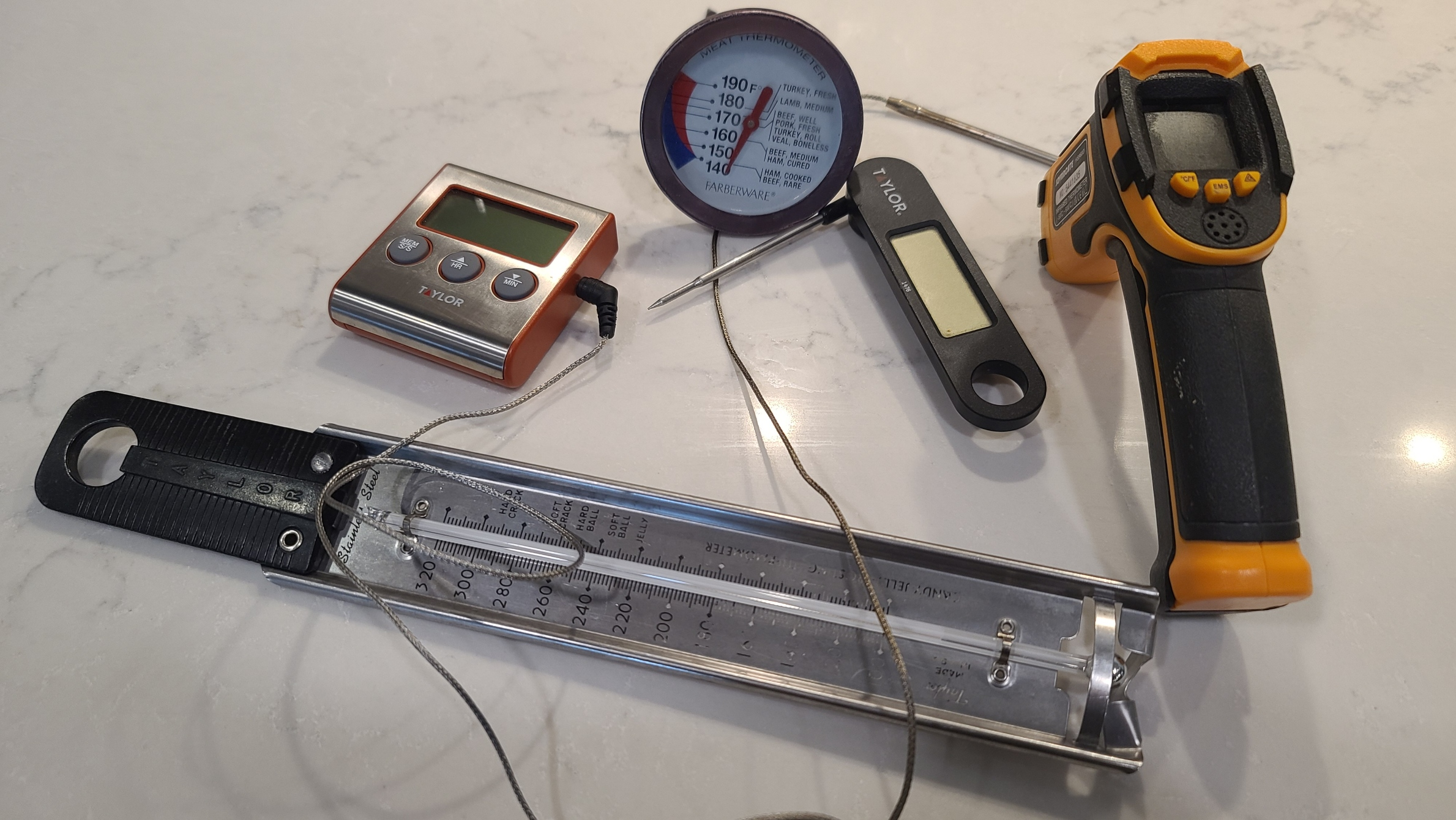
It can be said that what you keep in your kitchen is generally a matter of what you have acquired over time, and obtained when you needed them. Rarely does someone “plan” items in the kitchen other than major appliances.
The first two items (one of which I have recently mentioned in my rice pilaf recipe) are obvious safety items: a kitchen apron and a class-K fire extinguisher, which is intended for oil, grease and cooking fires. One cannot wait until they are needed to obtain them.
The third item is both a safety and a food quality item: an instant-read or probe thermometer.

These little guys can be as cheap as $10-$15 and can save you a lot of headaches; in some cases, literally. After cooking for more than 35 years, I can tell you that there are some estimates that are very difficult to make regarding the cooking temperature of food. Professional steakhouse grill masters will often say they can tell the doneness of a ribeye by how firm the steak is, by comparing against the relative firmness of pressing on different regions of the palms of their hands. I have never been able to get anything better than a ballpark estimation from this method; and “ballpark” is no way to protect against bacterial infection. Maybe you will have better outcomes with this method, but for me (and especially a beginner cook), a food thermometer is the best and most reliable tool for ensuring that your food preparation is both successful and safe. It’s also much easier to ensure doneness if you are working with new ovens, stoves, grills, pots, pats, skillets or even food itself where the cooking temperature may vary from what you are accustomed to.
No cook wants to hear, “…Is this chicken supposed to be pink?” But no one especially wants to hear that your visiting spouses family has come down with Campylobacter jejuni after a family visit (this also may vary according to your relationship with your spouses family. Just kidding). A cooks creativity and plate presentation can be Beard-award worthy, but under- or overcooked entrees will cause your diners to remember only that result. Also, a probe thermometer allows the cook to customize each diner’s order to the perfect level of doneness for that person.

Remote Probe and Wireless Probe thermometers are even better, especially in the oven, grill or smoker. Lifting the lid or door to check on the beef roast releases a lot of the heat and therefore increases cooking time. The newer Bluetooth wireless probes are even better- You can keep tabs on your food while you’re working on other dishes in the kitchen, from the couch or on the deck with friends. The probes themselves feed in through the lid, oven or grill door, and the console remains on your counter and beams the realtime food temps to your phone. These are only a bit more expensive, from $0 to $125 dollars depending on brand and features.
Please use food thermometers. The results are so much more reliable to a successful recipe, and the three seconds it takes to employ one more than makes a difference.


