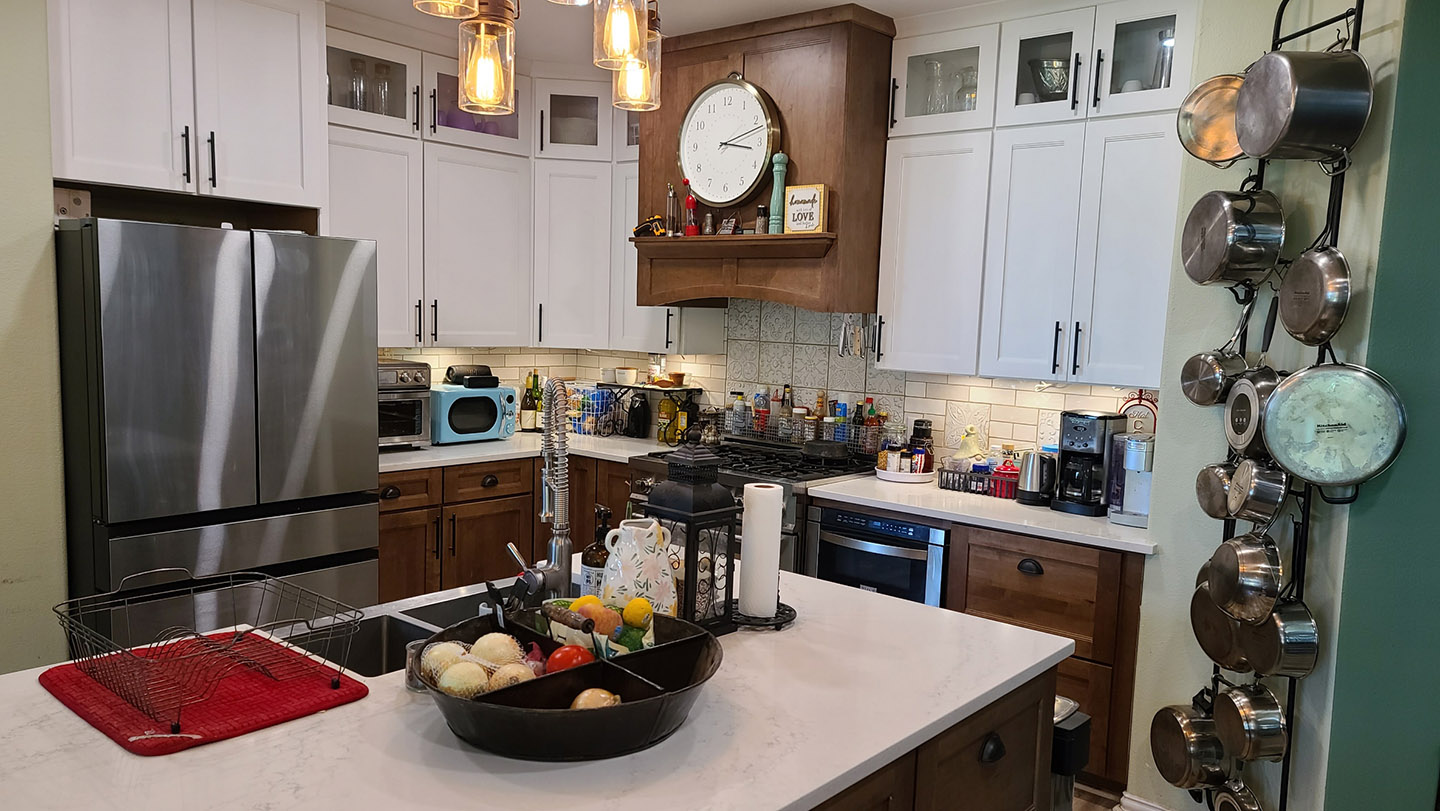
We live in the places we live, and occasionally we really don’t have the freedom, flexibility or money to make a kitchen that “works” for us in the way that we’d wish.
Designers will propose we adhere to rules like the “sink-fridge-oven” triangle, and other back of the napkin workflows. Oftentimes, however, our houses, apartments, condos or wherever you live doesn’t allow us the luxuries to move things around like we’d like. Plumbing, counters, electric service, stove venting etc. are fixed installations and they’re expensive to move. So we make due with what we have. My kitchen is small. I’ve had smaller in bachelor apartments, but not by much.
If you’re reading this, then this may or may not be of interest or need to you, depending on your experience and level of proficiency. I have met many people who have placed the items and selected storage without consideration of where those items are used, or the frequency with which they are needed, and witnessed them wandering aimlessly while something is on the stove and in need of attention. If you feel your setup works for you, then that’s all there is needed to be said, and with that, you can move on. If you’re frustrated with your arrangement, then please, read on.
Over the years, we’ve been fortunate enough to make upgrades where we can (cabinets, countertops, appliances) but there’s no getting around the fact that the design of our house has our kitchen stuck into a small corner. Most of the images you see on this site are taken in that same small corner in front of the can opener. Some things have helped quite a lot, taken in aggregate. Small optimizations here and there can turn a drudgery of searching for things and wading through utensil drawers into a non issue.
Here are a few things that have helped.
Moving your most used tools and meal components close at hand. These are the items you need for most every meal. Utensils are immediately to the left in a drawer underneath, no need to leave the stove unattended while looking for the correct spatula. Note: Due to proximity of the items above the stove, they are placed in baskets to be moved away from the back burners of the stove in case they’re needed. I move them frequently to protect against fire and heat affecting the contents. Usually, however, I only need the front burners.

Continuing the issue of containerization, grouped items are in baskets or trays to be easily moved if needed. In this instance, one is popcorn fixings (a true late night addiction in this house) and coffee and tea items in another (the true morning addiction).

Large storage spaces for pots and pans can be a real issue for the home cook. They take up a lot of space, and when placed in a drawer oftentimes involves having to remove other pots and pans to reach the ones you need, often with a lot of banging and clatter. Only the lids are in a cabinet, and require minimal space.

Coffee is a must for most American homes, and we’re no different. The machines and teapot are located directly below the mug and cup storage as they share the same accoutrement. Some would say that this was a waste of space, but 1) it works for us, and 2) it’s a lot cheaper than daily coffee shop expenses at $6 a cup.

If it’s one thing to be found on every counter in America, it’s a roll of paper towels. Keep these central in the kitchen for those quick spill cleanups before they spread.

Stove and oven-adjacent storage for measuring cups, preparation bowls and spices makes the actual cooking move much faster. Needing one cup of one thing, a quarter cup of something else, a quart of a third item- You can grab them all in one trip. Hunting around for a gravy separator with a hot pot in one hand and a spatula in the other can be a hassle, or possibly even dangerous.

So there is a measure of logistics when it comes to arranging a kitchen. My father was a manufacturing plant engineer where one of his tasks was to order and place every piece of equipment and tool in the optimum position for utility and speed; I supposed some of that rubbed off.
Again, so much of this advice is going to be contingent on your actual circumstances and kitchen arrangement. It’s going to vary from residence to residence, but some measure of planning can make for the least resistance in getting your food to the table. One or two changes may not make much of a difference, but taken all together, a well arranged kitchen can make quite a difference to the time, hassle and may mean the difference of a burnt outcome or a memorable meal.


