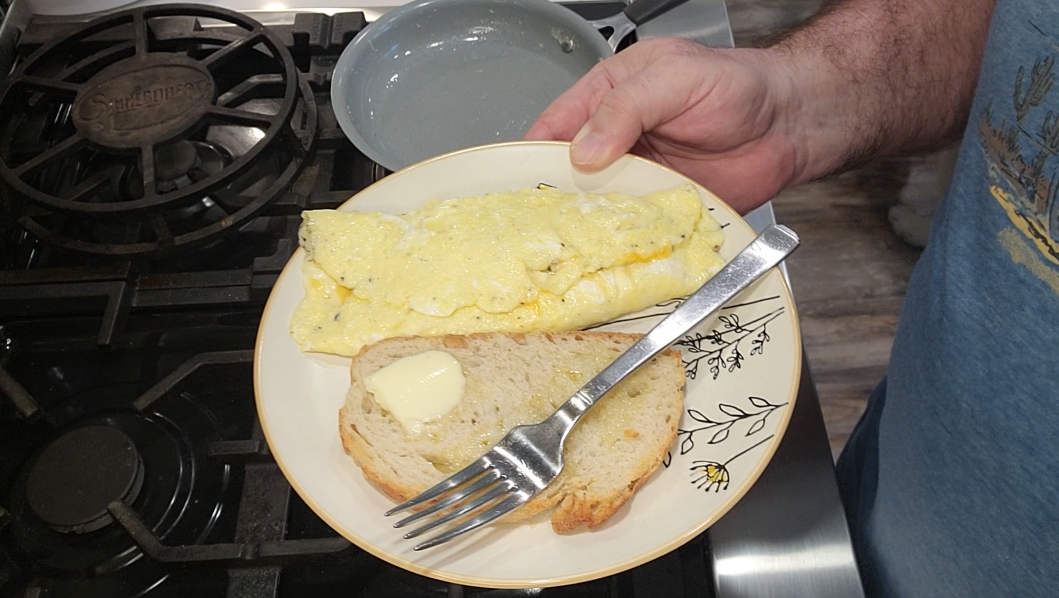
More than anything else, technique can make or break an omelet. Heat management and knowing when to quit is the factor determining whether your omelet is soft and creamy, or resembles show leather. The following is the Cold Pan method, which increases your chances of success for this sometimes vexing dish. The recipe follows the video.
Special Equipment:
1 Teflon or similarly coated medium skillet
Ingredients:
- 2 large eggs
- 1 – 2 Tbsp butter
- Dash of kosher salt
- Dash of freshly ground black pepper
- 1 Tbsp water
Optional ingredients, as shown in the video:
- 2 ounces shredded Mexican-blend cheese
- 1 pinch Herbs de Provence seasoning
Directions:
Break two eggs into a small bowl, and add the salt, pepper, and1 Tbsp water. Beat the egg mixture to incorporate the yolks and whites.
Place your skillet on the stove and set the pan to Medium Low. Immediately add the butter to the skillet and allow the butter to melt until it begins to fizz.
Using a spatula, add the egg mixture to the skillet and stir gently from the outside margins to the inside, making sure to turn the egg on the bottom on to the top, as to allow the more heated mixture to be on top.
Continue stirring for a minute to a minute and half, until just before you cannot agitate the pan to cover any bare spots in the skillet to flow in from the spatula strokes.
At this point, add any toppings and fillings you wish to add to half of the omelet in the pan. Await the omelet to cook until the omelet is no longer liquid, but still appears “wet.” If the omelet appears dry, it may be overcooked by the time it makes it to the table.
To remove the omelet, tilt the pan over a serving dish until 1/3 of the omelet is hanging off the side. Use the spatula to flip this portion of the omelet back over onto half of itself remaining in the pan. Tilt the pan again until the folded portion is on the plate, and then use a rotating wrist action to turn the final third of the omelet on top of itself to complete the three-way fold. See the video above for illustrative purposes. Serve immediately.
Serves 1
Notes
There is not much limiting what items to place into an omelet, but there is a limit on how much. If the omelet contents are too cold and make up a significant mass, it can delay the cooking time for the topmost layer of the omelet, allowing the bottom side to overcook before the rest of the omelet cooks.
If you have a filling that has a lot of water content, it may cause runniness from the filling and water oozing from the omelet. For instance, if you use chopped tomatoes, consider de-seeding the tomatoes first to get rid of the gel-like matter surrounding the seeds. Some deli meats are injected with water or solutions that like to leak as well. Avoid these fillings, opting for “natural” meats for a more pleasing outcome.


